

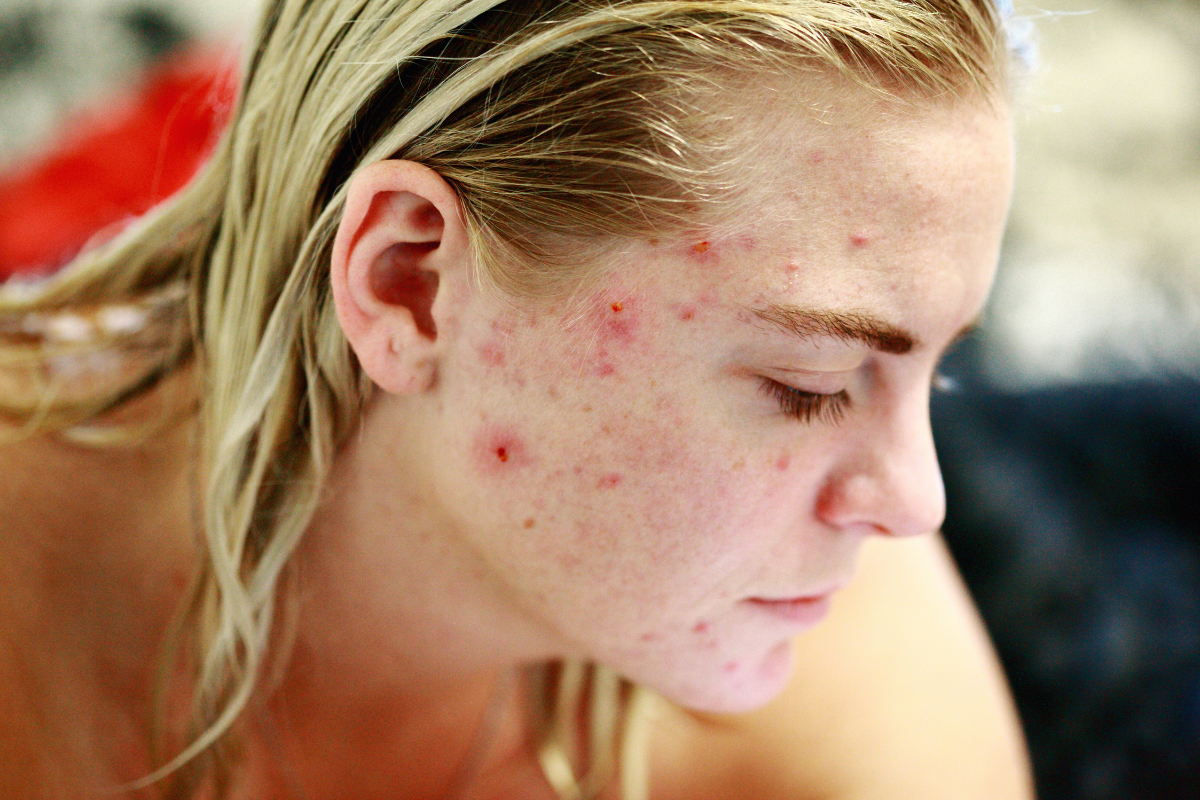
Hormonal acne in women is one of the most common reasons why skin changes appear or worsen after the age of 25. Unlike teenage acne, it has a different pattern of presentation, a more chronic course, and often requires a different therapeutic approach.
You can read more about the differences between adult female acne and other forms of acne in the article "Adult Female Acne – Causes, Hormones, and Treatment.“.
Many women notice that their acne worsens before menstruation, appears around the chin and jawline, or keeps recurring despite a proper skincare routine. Understanding the hormonal component is essential for establishing stable and long-term treatment.
What Is Hormonal Acne?
Hormonal acne is a form of acne in which increased sensitivity of the sebaceous glands to androgen hormones plays a dominant role. It is important to emphasize that this does not necessarily mean that hormone levels in the blood are elevated. Very often, the issue lies in the local reactivity of the skin.
Androgens stimulate the sebaceous glands to produce more sebum. When this is combined with abnormal keratinization and inflammation, it can lead to:
- Clogged pores
- Comedone formation
- Development of inflammatory lesions
This type of acne often has a long-lasting and recurrent course.
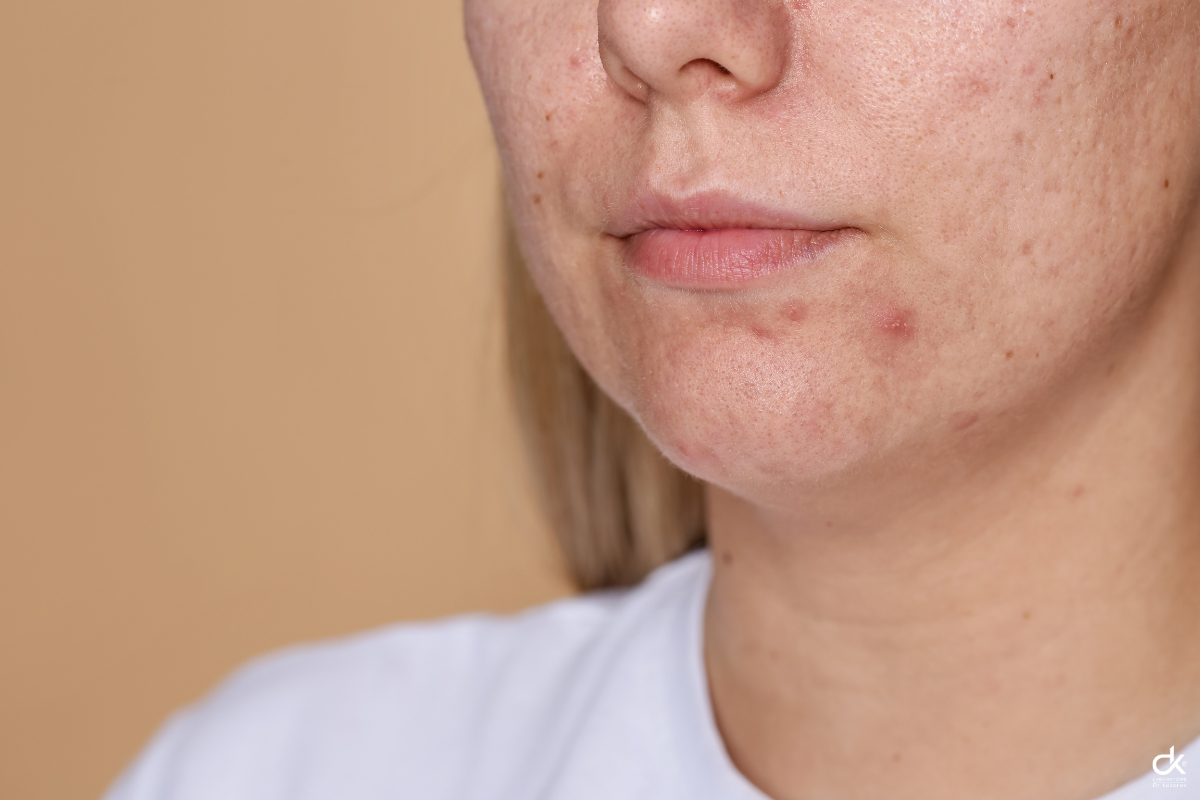
How to Recognize Hormonal Acne
There are several characteristic clinical patterns.
Location of Lesions
The most commonly affected areas are:
- Chin
- Jawline
- Lower third of the face
- Neck
This distribution is typical of adult female acne and differs from teenage acne, which usually affects the T-zone more prominently.
Connection With the Menstrual Cycle
In many women, breakouts worsen several days before menstruation. Hormonal fluctuations during the luteal phase of the cycle can stimulate sebaceous glands and worsen inflammation.
This cyclical pattern strongly suggests a hormonal component.
Type of Lesions
Hormonal acne is often:
- Deep and painful
- Subcutaneous
- Slow to resolve
- More prone to post-inflammatory marks
Unlike superficial comedones, inflammatory lesions tend to dominate the clinical picture.
PCOS and Hormonal Imbalance
Polycystic ovary syndrome (PCOS) is one possible cause of hormonal acne, but it is not present in all women with this condition. PCOS may be suspected when acne is accompanied by:
- Irregular menstrual cycles
- Increased hair growth
- Difficulties with body weight
However, it is important to note that even when hormone values appear normal, insulin resistance and thyroid hormone disorders may still be present. Along with polycystic ovaries, these factors can form part of a broader metabolic syndrome. This is why an individual medical assessment is essential.
Acne After Stopping Hormonal Contraception
After discontinuing birth control pills, some women may experience a so-called post-contraceptive acne flare. While taking the pill, androgenic activity is suppressed, and after stopping treatment, the body needs time to re-establish hormonal balance.
This worsening is usually temporary, but in some women it may require targeted treatment.
The presence of acne together with elevated testosterone metabolites, such as androstenedione or DHEA-S, may require the use of antiandrogen therapy, such as spironolactone. Therefore, stopping oral contraception does not always mean stopping further systemic therapy.
Treatment Approach for Hormonal Acne
Treating hormonal acne requires patience and an individualized approach.
Local Therapy
Retinoids form the foundation of treatment because they:
- Normalize the process of keratinization
- Reduce comedone formation
- Have anti-inflammatory effects
Azelaic acid and niacinamide may help reduce redness and post-inflammatory hyperpigmentation.
It is important to emphasize that antibiotics, although they may temporarily reduce inflammation, are not a long-term solution because they do not address the underlying mechanism of acne formation.
Protecting the Skin Barrier
A common mistake in hormonal acne is attempting to aggressively “dry out” the skin in order to clear breakouts faster. Intensive exfoliation, high concentrations of acids, and the simultaneous use of multiple active ingredients can damage the epidermal barrier.
The skin barrier plays a key role in controlling inflammation. When it is compromised, this can lead to:
- Increased transepidermal water loss
- Increased skin reactivity
- Microinflammation
- Paradoxical increase in sebum production
This condition can prolong acne and reduce tolerance to treatment.
For this reason, active ingredients such as retinoids or acids should be introduced gradually, usually a few times per week at first, while carefully monitoring the skin’s response. In patients with sensitive skin, a layering method may be recommended: first applying a lightweight moisturizing product to stabilize the barrier, then the therapeutic product, followed by a final moisturizing layer.
This approach allows treatment to remain effective while also being tolerable. Long-term, controlled therapy produces more stable results than short-term, intensive attempts to “clear” the skin quickly.
When Systemic Therapy Is Needed
In certain cases, topical therapy is not enough. A systemic approach may be considered when there are:
- Deep, painful, nodular lesions
- Significant inflammation
- Rapid progression
- A tendency to scar
- Lack of response to properly conducted topical therapy
Systemic treatment may include hormonal regulation, systemic retinoids, or other targeted therapeutic options, depending on the clinical picture and individual factors.
Before deciding on systemic therapy, the following are taken into account:
- Hormonal status
- General health
- Pregnancy planning
- Previous treatment attempts
The goal of this approach is not only to reduce current lesions but also to interrupt the inflammatory cycle and achieve long-term skin stabilization.
Why Does Hormonal Acne Come Back?
Hormonal acne is linked to the body’s internal regulatory mechanisms, which is why it tends to recur. Even when laboratory hormone levels remain within normal ranges, the skin may react to minimal fluctuations during the menstrual cycle, periods of stress, or other physiological changes.
Hormonal acne is one form of adult female acne, which we discuss in detail in the main guide.
A common reason for recurrence is stopping treatment too early after the first signs of improvement. Even when inflammatory lesions resolve, the mechanism of increased sebaceous gland activity may still be present.
This is why a maintenance strategy is important — gentle but consistent treatment even when the skin appears stable. Maintenance may include less frequent retinoid use, continued sebum regulation, and ongoing protection of the skin barrier.
The goal is not short-term “clearing” of the skin, but long-term control of the condition and a reduced risk of future flare-ups.
FAQ – Frequently Asked Questions About Hormonal Acne
Not necessarily. Many women with hormonal acne have normal laboratory results. The issue is often increased sensitivity of the sebaceous glands to normal hormonal fluctuations, rather than abnormal hormone levels themselves.
Hormonal testing is recommended when acne is accompanied by irregular menstrual cycles, increased hair growth, hair loss, or other signs of possible hormonal imbalance. The decision is made based on the clinical picture.
In most cases, it does not resolve permanently on its own. Periods of improvement and worsening may alternate, but without an appropriate approach, lasting stabilization is uncommon.
A diet high in simple sugars and high-glycemic-index foods may contribute to worsening inflammation in predisposed individuals. However, diet is only one factor and not the sole cause of hormonal acne.
Initial results are usually expected after 6 to 8 weeks, while several months of consistent treatment are often needed for skin stabilization. Hormonal acne requires patience and continuity.
Retinoids are an important part of treatment because they normalize keratinization and reduce pore blockage. However, hormonal acne is a multifactorial condition, and a retinoid is usually part of a combined approach rather than the only solution.
In milder cases, properly selected skincare may lead to improvement. However, in persistent, painful, or recurrent cases, a dermatological assessment is recommended so that treatment can be adapted to the clinical picture and complications such as scarring can be prevented.
For mild changes, they may be helpful. However, typical hormonal acne often has a deeper underlying mechanism and requires precise combination of active ingredients in appropriate concentrations. An unsuitable choice may lead to irritation or insufficient therapeutic effect.
Hormonal acne tends to recur because it is connected to the body’s internal regulatory mechanisms, especially the sensitivity of sebaceous glands to androgen hormones. Even when the skin temporarily calms down, the underlying mechanism may still be present.
A common reason for relapse is stopping treatment as soon as improvement occurs. The disappearance of visible lesions does not mean that the skin has been stabilized long term. With hormonal acne, a maintenance phase is often needed, using a gentler but continuous skincare or treatment regimen.
The goal of treatment is not only to remove current lesions but also to achieve long-term control and reduce the frequency of future breakouts.
Author box
Dr. Jasmina Kozarev is a dermatovenerologist with a doctorate in the field of laser vascular procedures and a pioneer of aesthetic laser treatments in Serbia. She graduated from the Faculty of Medicine in Novi Sad as one of the best students of her generation, and she defended her doctoral thesis on laser treatment of vascular lesions in 2011. She has been a lecturer at domestic and international aesthetic and laser conferences for many years, with a special focus on dermatological acne therapy, skin regeneration and non-surgical rejuvenation.